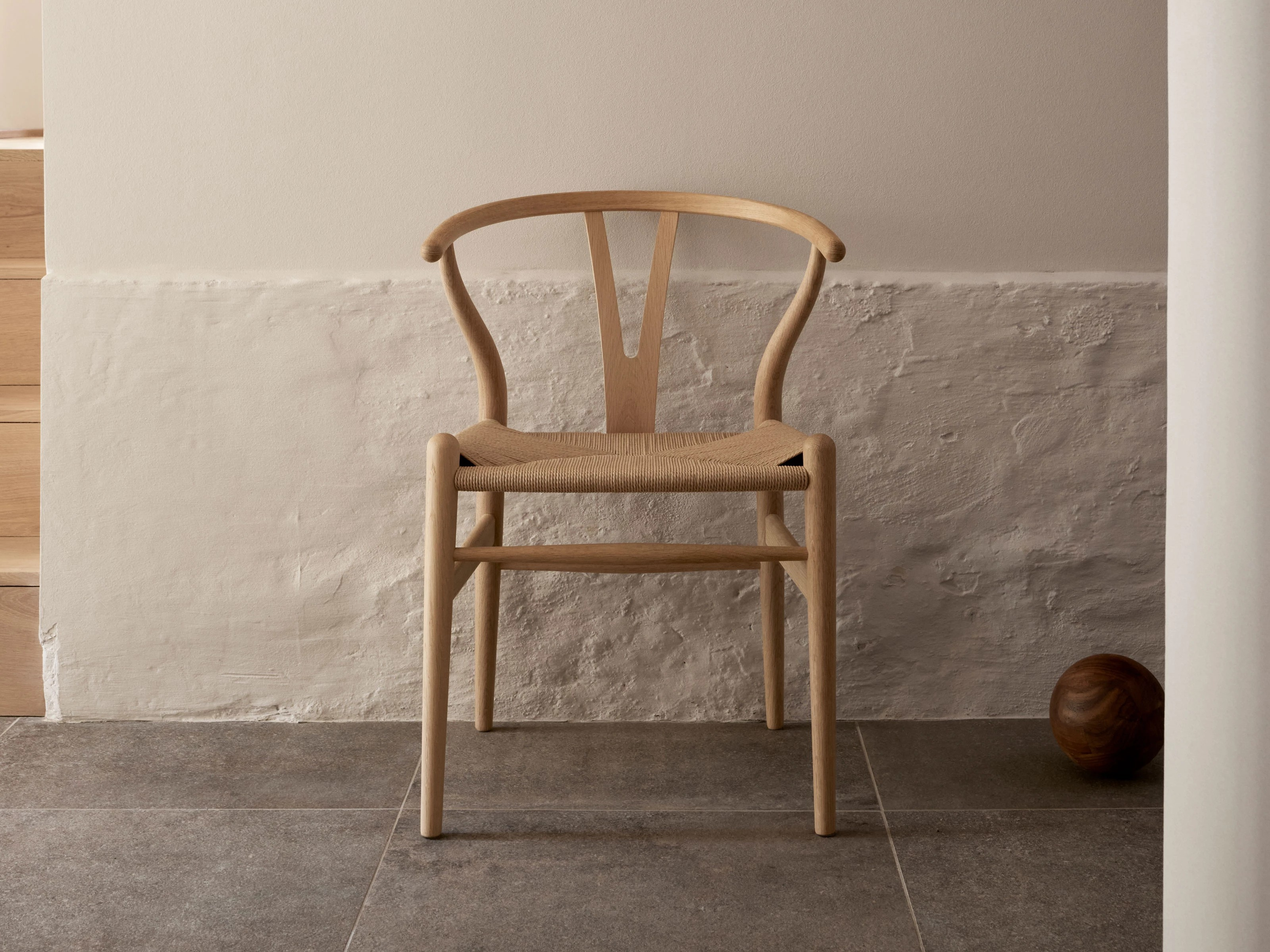
The Wishbone Chair: A Story of Timeless Craft and Quiet Beauty
The Wishbone Chair: A Story of Timeless Craft and Quiet Beauty
There are designs that follow trends, and then there are designs that quietly outlive them. The Wishbone Chair belongs to the latter. It doesn’t demand attention—it earns it, slowly, over time.
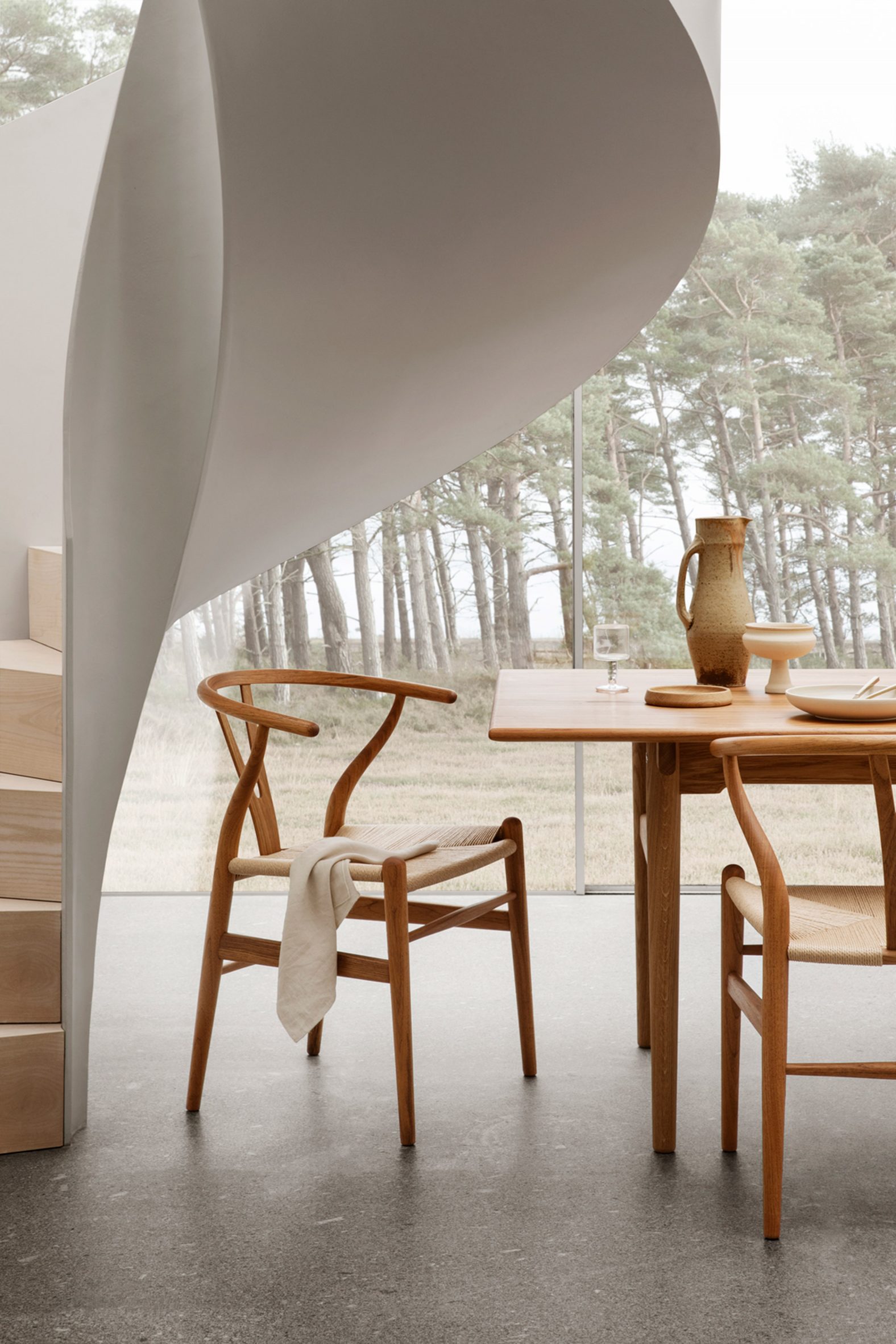
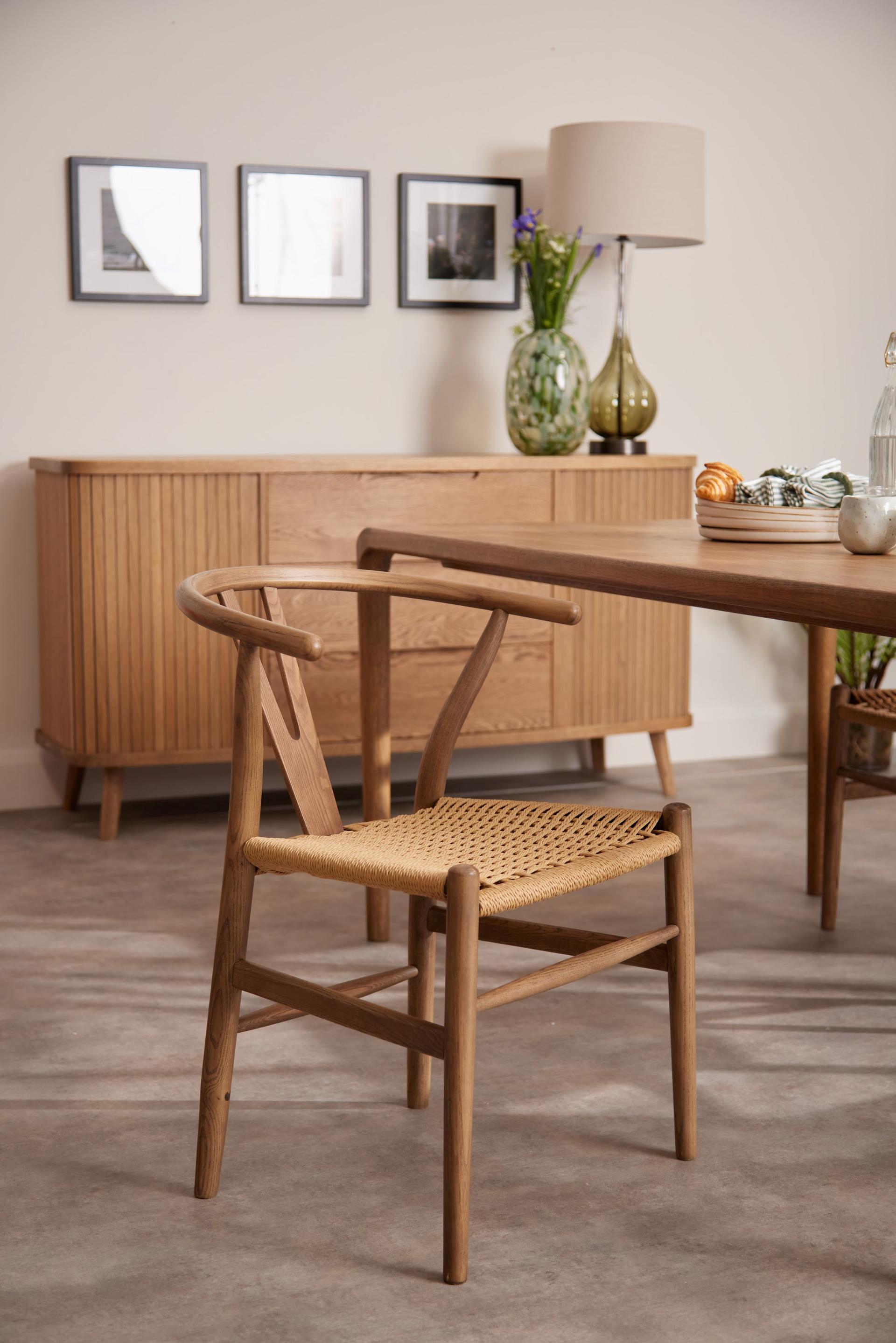
Picture a calm, sunlit dining space. Natural wood tones, soft textures, and a sense of balance. At the center of it all sits a chair—light in form, gentle in presence. You run your hand along its curved backrest, and without thinking, you pull it closer and sit. It feels effortless, almost as if it was always meant to be there.
This is the quiet beauty of the Wishbone Chair.
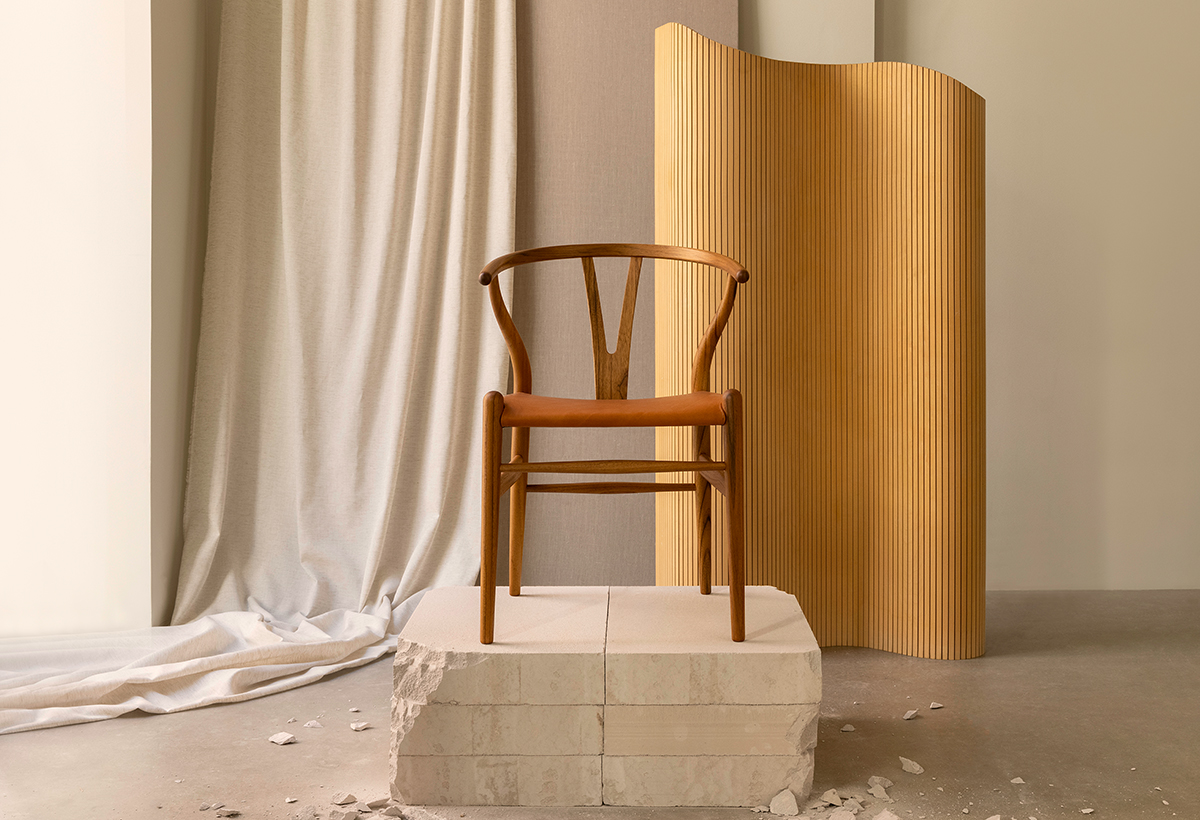
A Legacy Rooted in Craft
The story begins with Carl Hansen & Søn, a brand founded in 1908 in Denmark. What started as a small workshop grew into one of the most respected names in furniture design—not by chasing trends, but by holding firmly to craftsmanship, quality materials, and timeless principles.
For decades, the company worked with master designers who believed that furniture should not only look beautiful, but also feel honest. Among them was one of the most influential figures in modern design—Hans J. Wegner.
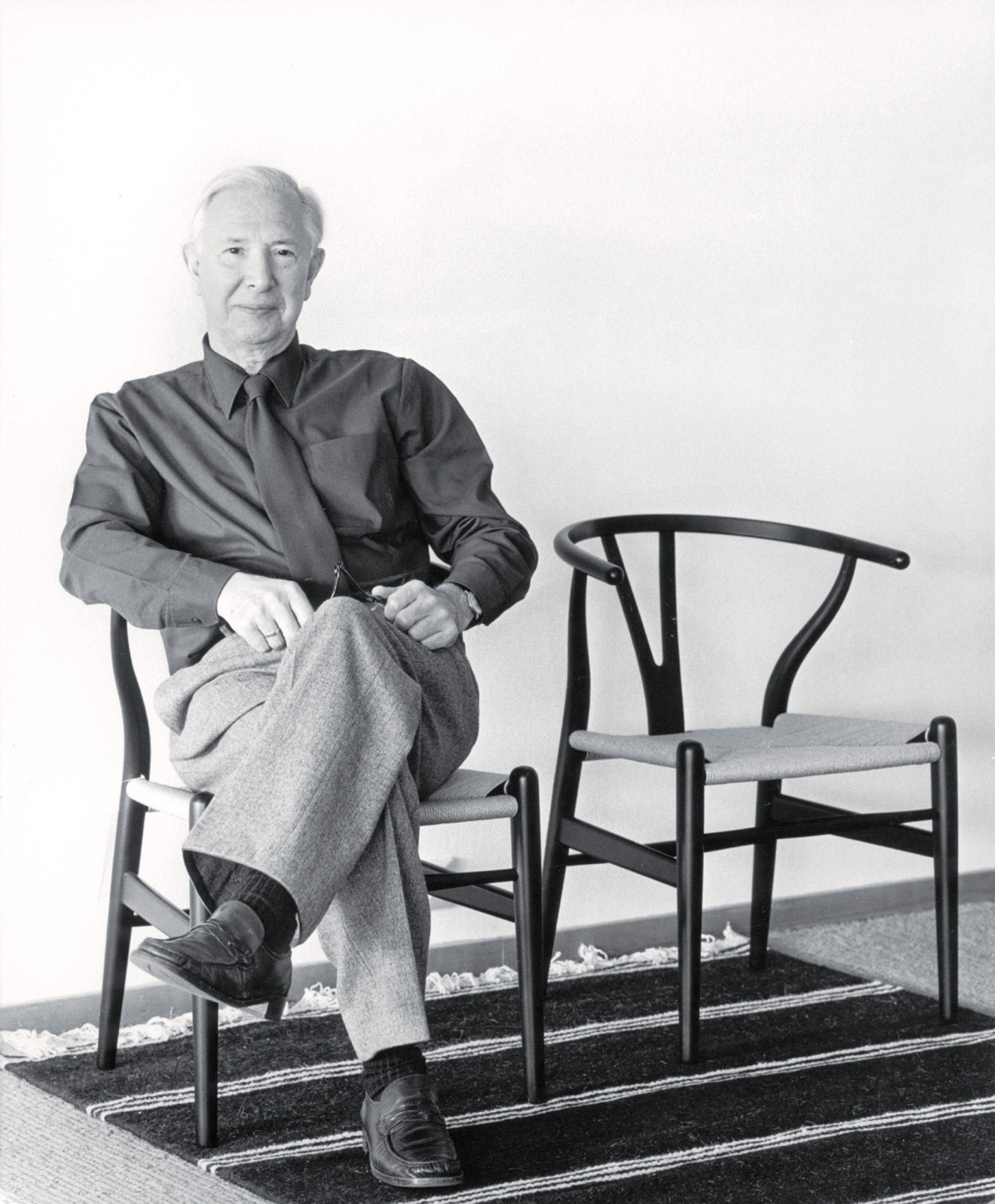
The Designer Who Listened to Wood
Hans J. Wegner had a rare sensitivity to materials. He understood wood—not just as a structure, but as something alive, something that could be shaped into comfort and art.
In 1949, inspired by the elegant forms of traditional Chinese Ming chairs, Wegner began sketching what would become one of his most celebrated works. He wasn’t interested in replicating history. Instead, he simplified it—removing excess, refining proportions, and focusing on what truly mattered.
The result was a chair that felt both ancient and modern at the same time.
The Birth of an Icon
When the Wishbone Chair was introduced in 1950, it stood apart immediately.
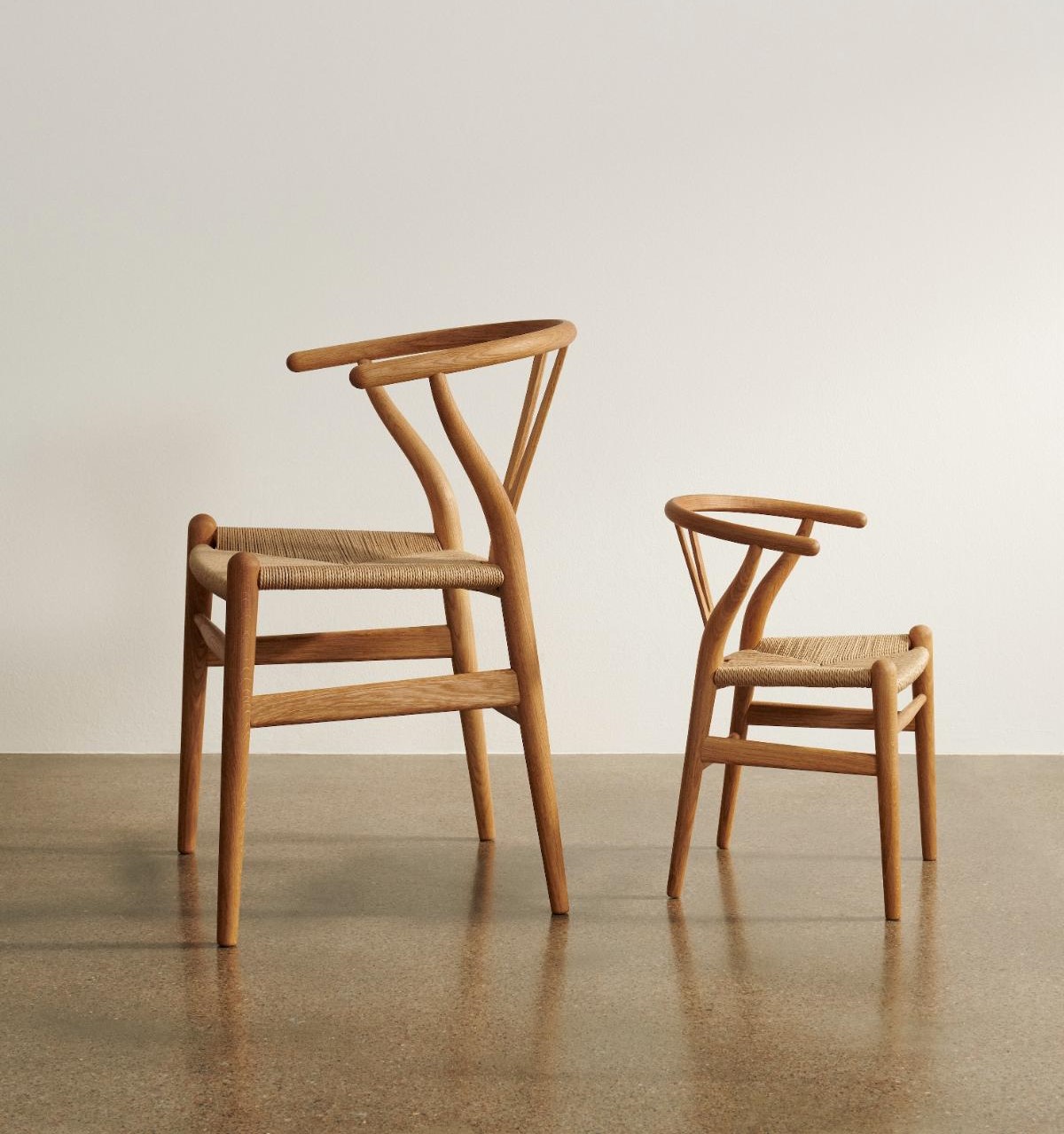
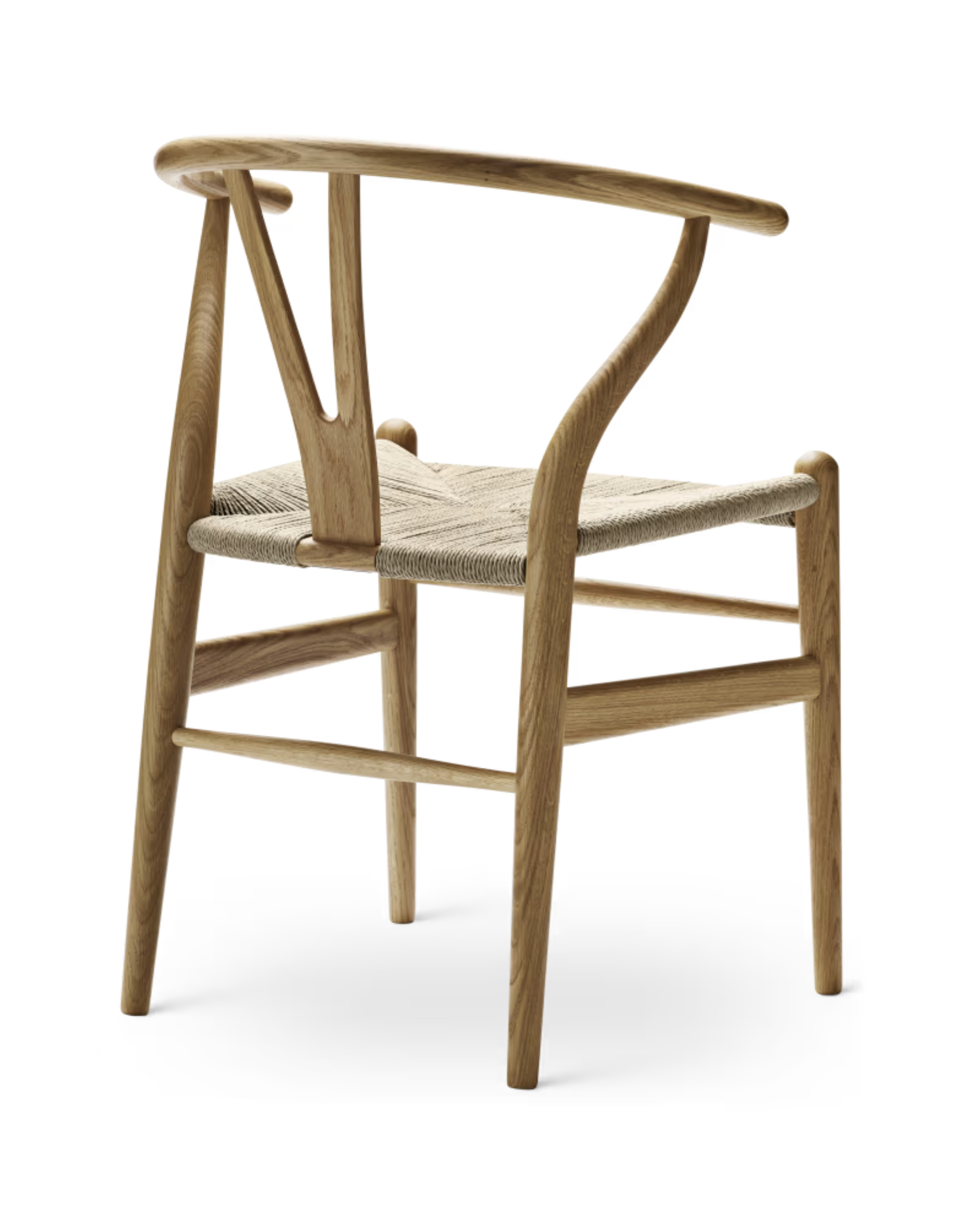
Its defining feature—the graceful Y-shaped backrest—was not just aesthetic. It provided support, structure, and identity. This single detail gave the chair its name and its unmistakable character.
But beyond its appearance, the chair carried something deeper: balance.
Every curve had a purpose.
Every joint was intentional.
Nothing was added without reason.
It was simplicity, perfected.
The Beauty of Making
What truly sets the Wishbone Chair apart is how it is made.
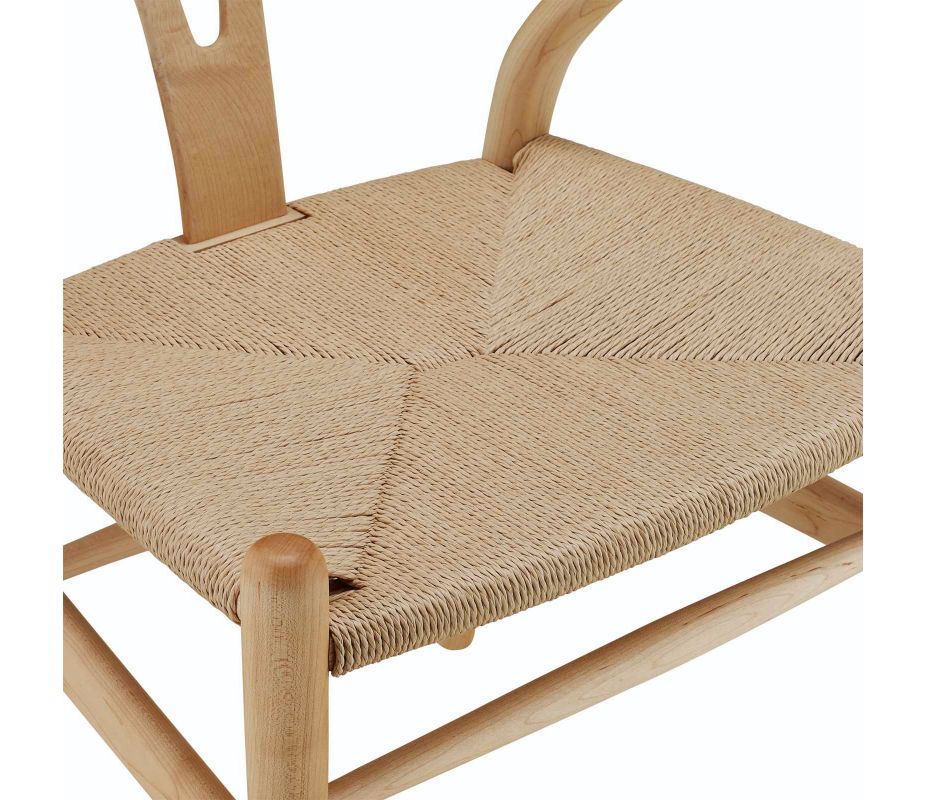
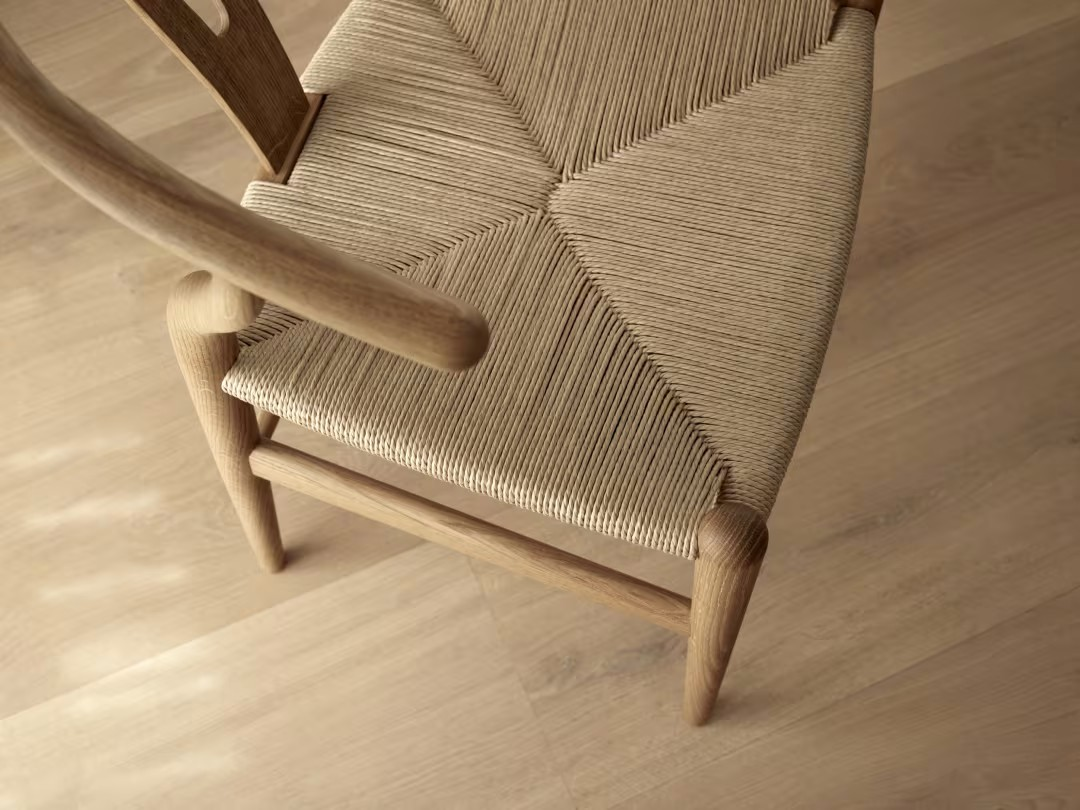
Each chair goes through more than 100 production steps, many of them completed by hand. Skilled craftsmen carefully bend solid wood using steam, shaping it into fluid, organic lines. The seat is then hand-woven using paper cord—a meticulous process that requires both patience and precision.
No two chairs feel exactly the same, and that’s the point. Each one carries subtle traces of the hands that made it.
In a world of mass production, this level of care feels almost rare.
A Chair That Lives With You
The Wishbone Chair doesn’t just sit in a room—it becomes part of daily life.
It supports quiet mornings with coffee.
It holds long conversations over dinner.
It witnesses moments, both ordinary and meaningful.
Its design allows it to blend seamlessly into different interiors—whether it’s a minimalist apartment, a Scandinavian-inspired home, or a modern tropical space in Johor Bahru. It adapts without losing its identity.
And that’s what makes it timeless.
Why It Still Matters
More than 70 years later, the Wishbone Chair remains one of the most recognized pieces in Scandinavian furniture design.
Not because it tries to stay relevant—
but because it was designed with honesty from the very beginning.
It represents:
- Craft over convenience
- Simplicity over excess
- Longevity over trends
For homeowners and designers alike, it offers something rare: a piece that feels just as right today as it did decades ago.
Closing Thought
Some furniture is made to fill a space.
Some is made to impress.
The Wishbone Chair is made to endure—quietly, beautifully, and effortlessly becoming part of the life around it.
Take a closer look at the refined design details and craftsmanship that bring the Wishbone Chair to life, Buy CH24 | Wishbone Chair designed by Hans J. Wegner | Carl Hansen & Søn
↵Back to Design