Waterproofing and Plumbing in Building Construction, Architecture, Interior Design and Renovation in Johor Bahru
Waterproofing and Plumbing in Building Construction, Architecture, Interior Design and Renovation in Johor Bahru
In every building construction project, there are hidden systems that play a vital role in long-term safety and comfort: waterproofing and plumbing. These elements may not be visible, but they directly influence durability, usability, and even the success of an interior design project. In Johor Bahru, where high humidity and heavy rainfall are common, proper planning of waterproofing and plumbing is essential in both architecture and renovation to meet every client design need.
1. Waterproofing in Johor Bahru Building Construction
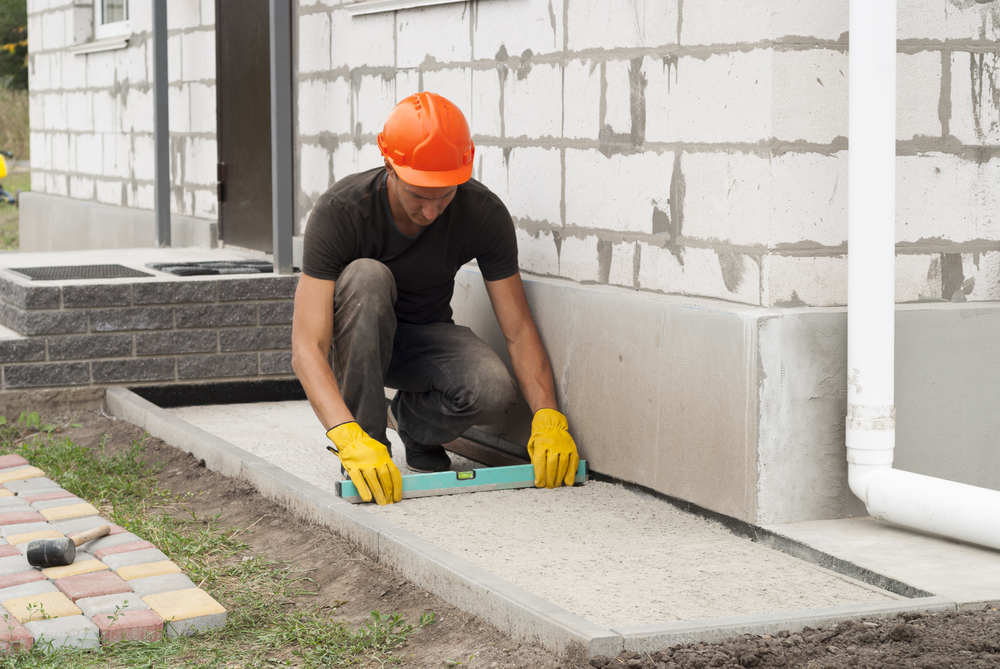
Waterproofing is more than a technical requirement—it protects both structure and interiors. In construction, poor waterproofing can damage the building layout and lead to cracks, leaks, and mold growth.
- Structural Protection – Prevents water from weakening walls and foundations.
- Interior Design Preservation – Protects tiles, wooden panels, and paint finishes from water damage.
- Long-Term Value – Ensures the design layout remains beautiful and functional over time.
2. Plumbing as the Hidden Architecture of a Building
Plumbing is often considered the invisible architecture of a home or office. A carefully planned plumbing design layout ensures both efficiency and comfort, supporting modern lifestyles.
- Efficient Building Layout – Proper pipe routing ensures functionality without disrupting interiors.
- Meeting Client Design Needs – Well-placed sinks, bathrooms, and kitchens improve daily convenience.
- Safe Construction – Leak-free systems prevent long-term structural damage and health risks.
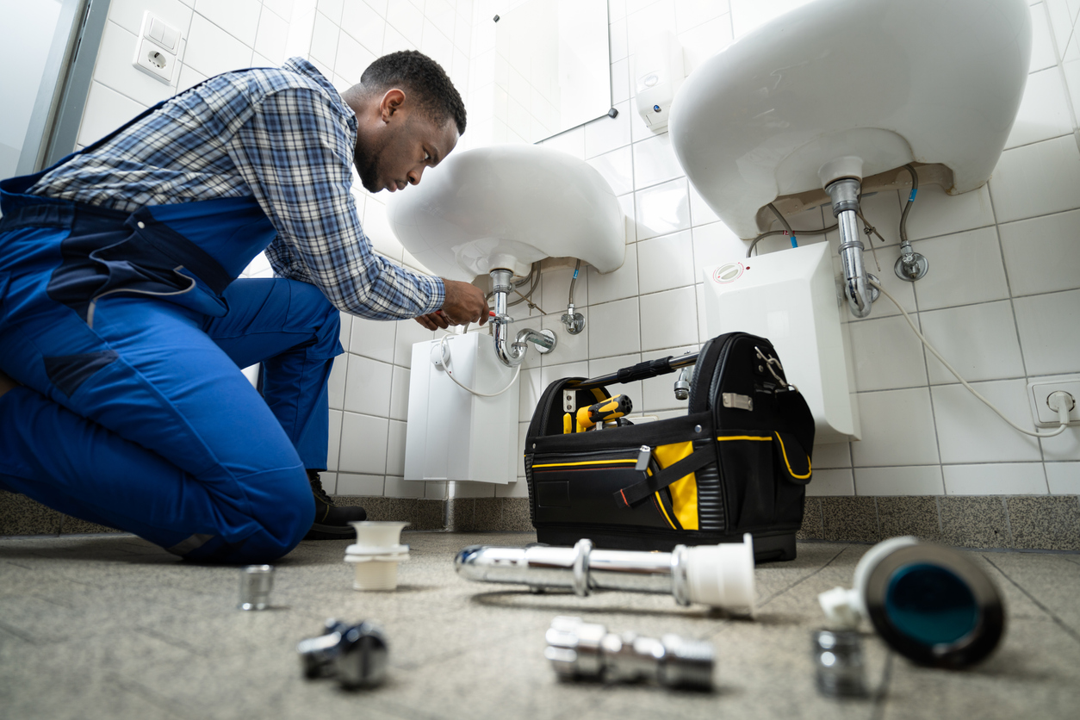
3. Waterproofing and Plumbing Methods in Johor Bahru Construction
To ensure durability in construction, architecture, and interior design, professionals apply proven waterproofing and plumbing methods tailored to the building layout and design layout.
Waterproofing Methods
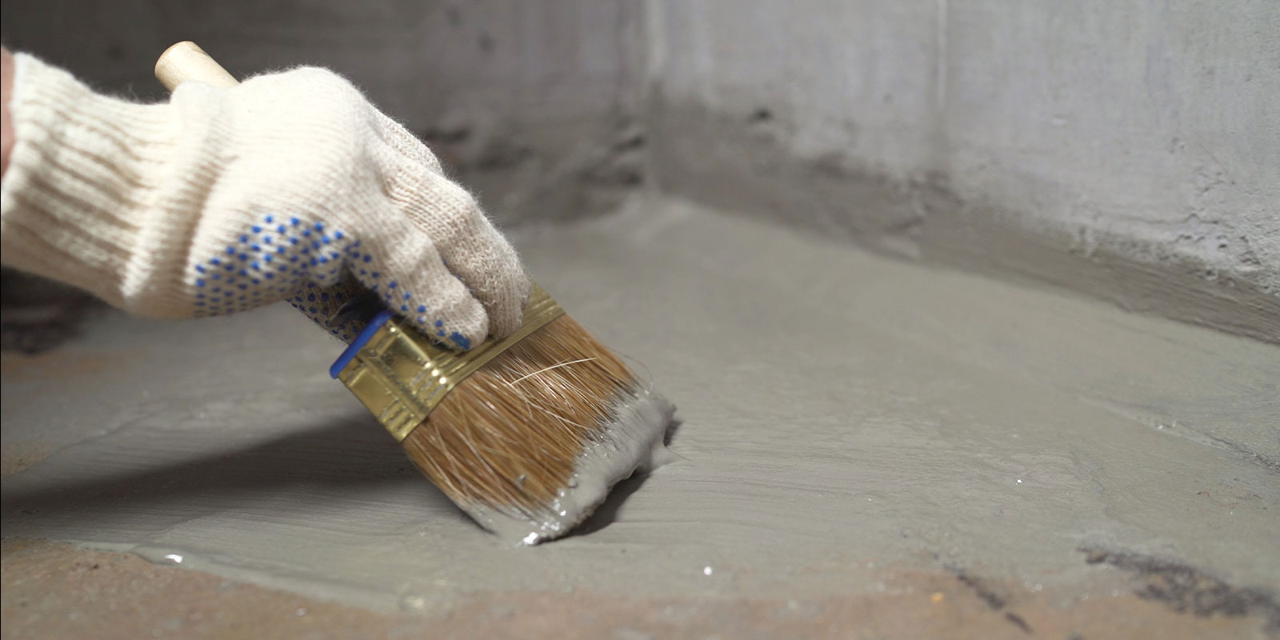
a) Cementitious Waterproofing
It is one of the most widely used methods in building construction and renovation. It involves applying a cement-based coating or slurry that bonds with concrete and masonry surfaces to create a strong, water-resistant layer. Because it is easy to apply and cost-effective, it is highly popular in Johor Bahru construction projects, especially where humidity and rainfall are major concerns.
Where is Cementitious Waterproofing Used?
- Bathrooms & Wet Areas – Protects walls and floors before tiling, ensuring the design layout remains damage-free.
- Basements & Foundations – Prevents seepage that could weaken the building layout and structure.
- Water Tanks & Pools – Safe for direct water contact, ensuring durability.
- Kitchens & Balconies – Common in interior design renovations to avoid leaks and dampness.
Advantages of Cementitious Waterproofing
- Durability – Strong bond with concrete, making it suitable for structural construction.
- Easy Application – Can be applied with a brush, spray, or trowel.
- Cost-Effective – Affordable compared to other advanced waterproofing systems.
- Versatile Use – Suitable for both residential and commercial architecture projects in Johor Bahru.
Limitations
- Limited flexibility compared to liquid membranes (may crack if the structure shifts).
- Best for areas that are not exposed to extreme movement or direct sunlight.
- Requires skilled application to ensure no gaps are left behind.
b) Liquid Membrane Waterproofing
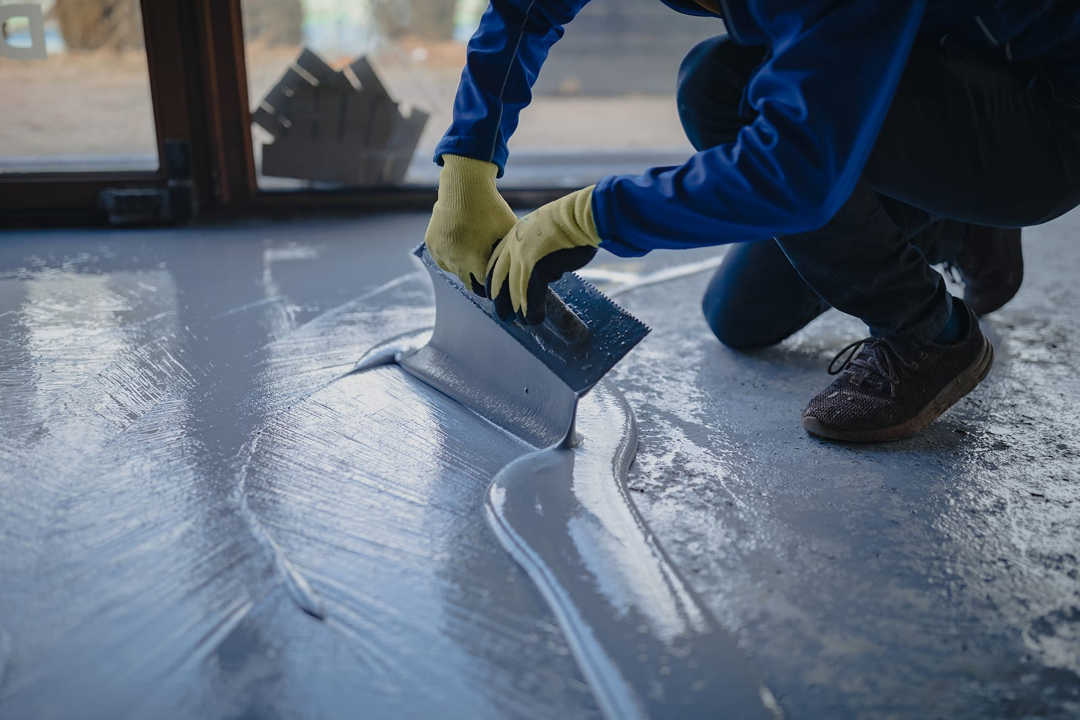
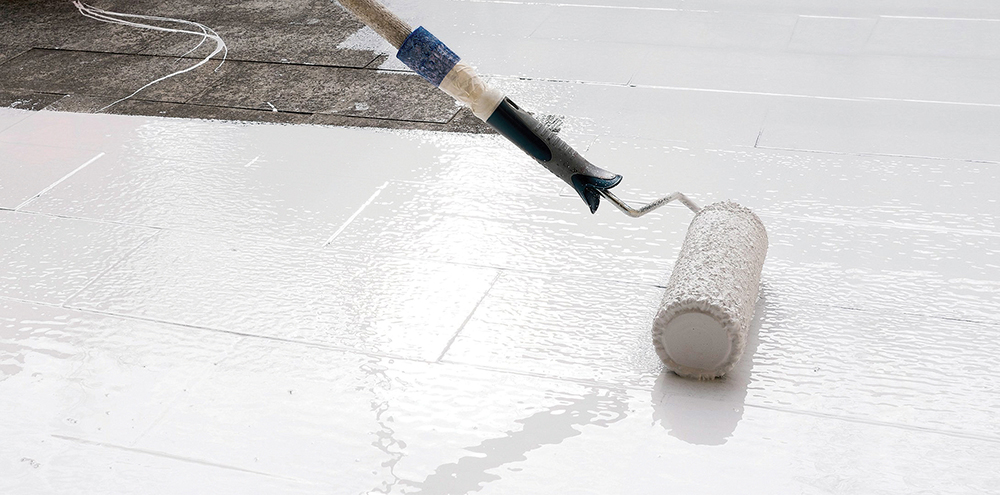
Liquid membrane waterproofing is a modern method used in building construction and renovation. It involves applying a thin, liquid coating that dries into a seamless, flexible, and highly elastic waterproof barrier. This flexibility makes it especially useful in Johor Bahru, where heavy rainfall and temperature changes can cause buildings to expand and contract.
Where is Liquid Membrane Waterproofing Used?
- Roofs & Terraces – Provides a seamless barrier against rain and direct sun.
- Balconies & External Walls – Protects exposed areas in architecture design.
- Bathrooms & Wet Rooms – Used under tiles in interior design layouts to prevent leakage.
- Podiums & Parking Decks – Ensures the building layout remains safe from water penetration.
Advantage of Liquid Membrane Waterproofing
- Flexibility – Can stretch and move with the structure, preventing cracks.
- Seamless Application – No joints or seams, reducing the risk of leaks.
- Versatile Use – Suitable for both horizontal and vertical surfaces.
- Durable Finish – Resistant to weathering, making it ideal for Johor Bahru’s tropical climate.
Limitations
- Requires skilled application to ensure uniform thickness.
- May need protective layers in high-traffic areas.
- Slightly more expensive than cementitious methods, depending on project size.
c) Bituminous Coating
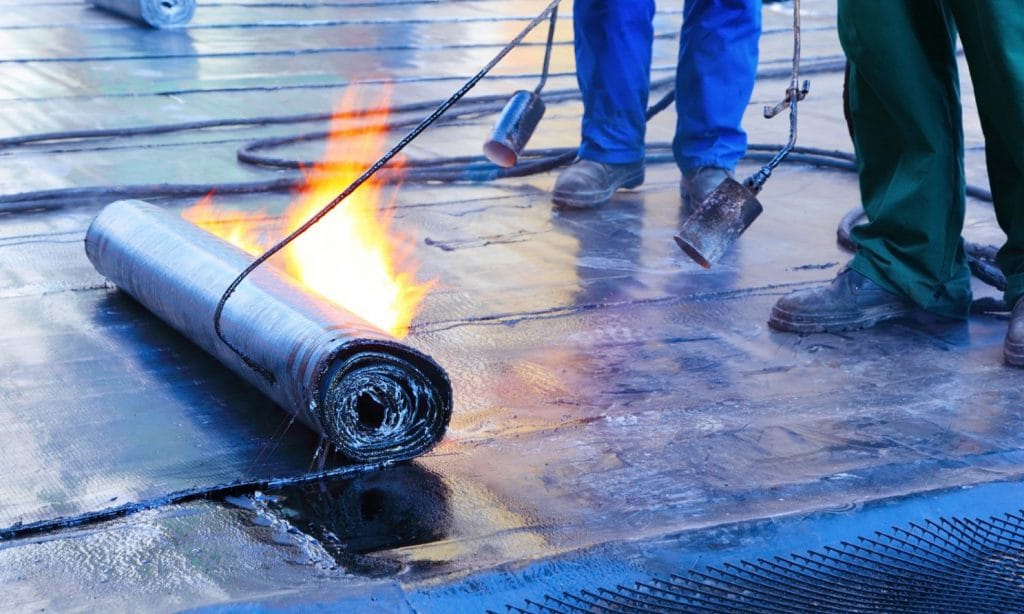
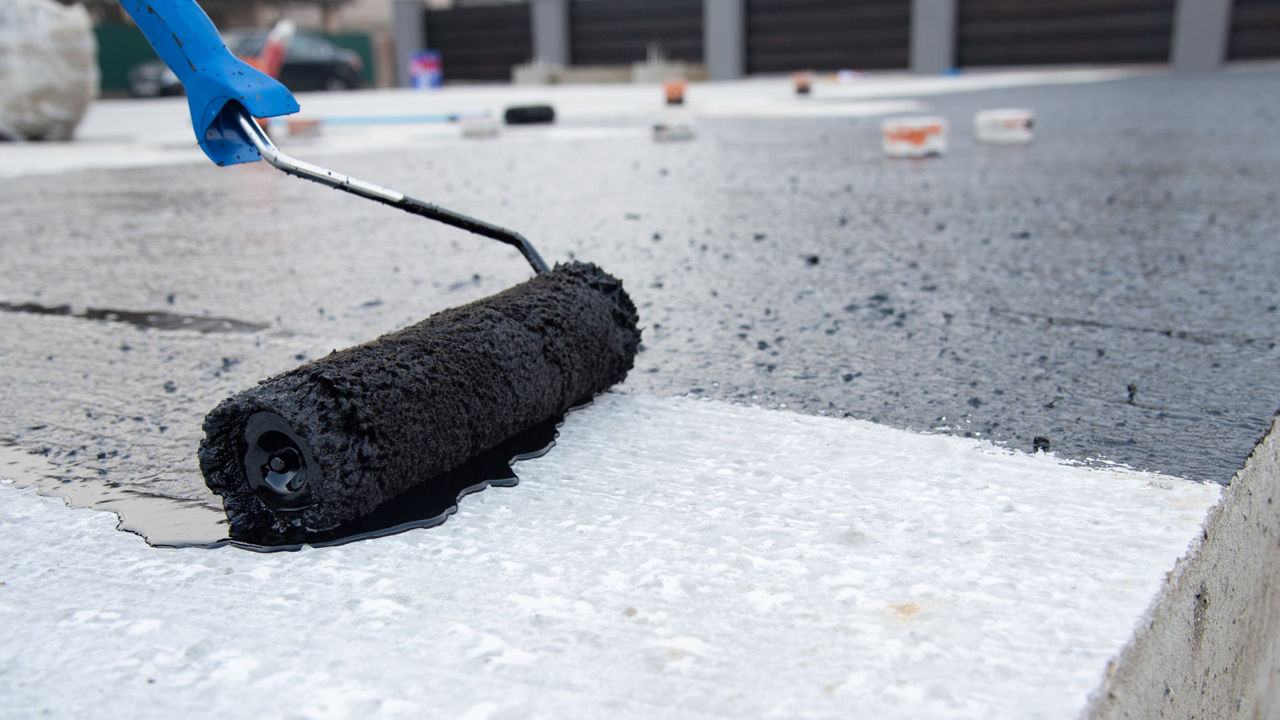
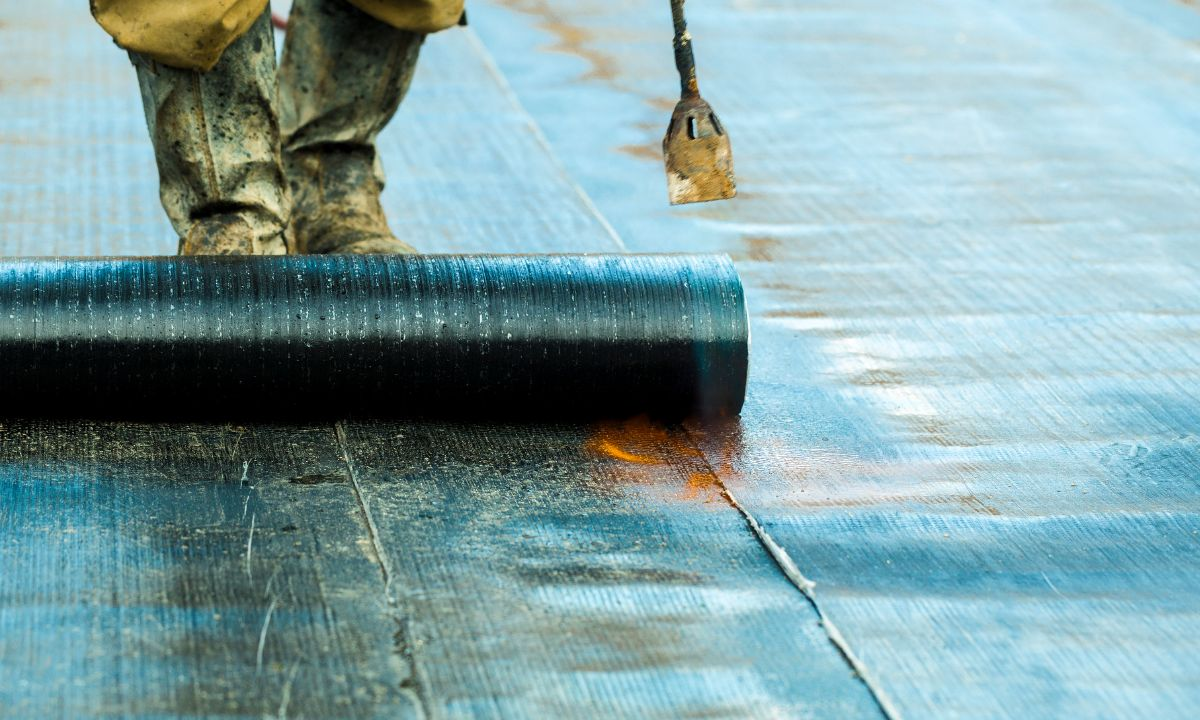
Bituminous coating, also known as asphalt coating, is a flexible, protective layer made from bitumen-based materials. It is widely used in building construction and renovation for waterproofing areas exposed to constant moisture and underground conditions.
In Johor Bahru, where heavy rainfall and soil dampness are common, bituminous coating plays a vital role in preserving both architecture and interior design elements by protecting the structure from water penetration.
Where is Bituminous Coating Used?
- Foundations & Basements – Protects underground structures from water seepage.
- Retaining Walls – Keeps soil moisture from damaging the building layout.
- Underground Tunnels & Concrete Structures – Provides a durable waterproofing layer.
- Bathrooms & Kitchens (Renovation Projects) – Sometimes used beneath screeds in wet areas
Advantages of Bituminous Coating
- Excellent Moisture Protection – Strong resistance against water and damp soil.
- Durable & Long-Lasting – Extends the life of the construction structure.
- Flexible Application – Can be applied with brush, roller, or spray.
- Cost-Effective – Affordable compared to some advanced waterproofing systems.
Limitations
- Sensitive to UV exposure (requires protective layers in exposed areas).
- Not suitable for high-movement areas due to limited flexibility compared to liquid membranes.
- May soften under extreme heat, requiring modification with polymers.
d) Polyurethane Liquid Membrane
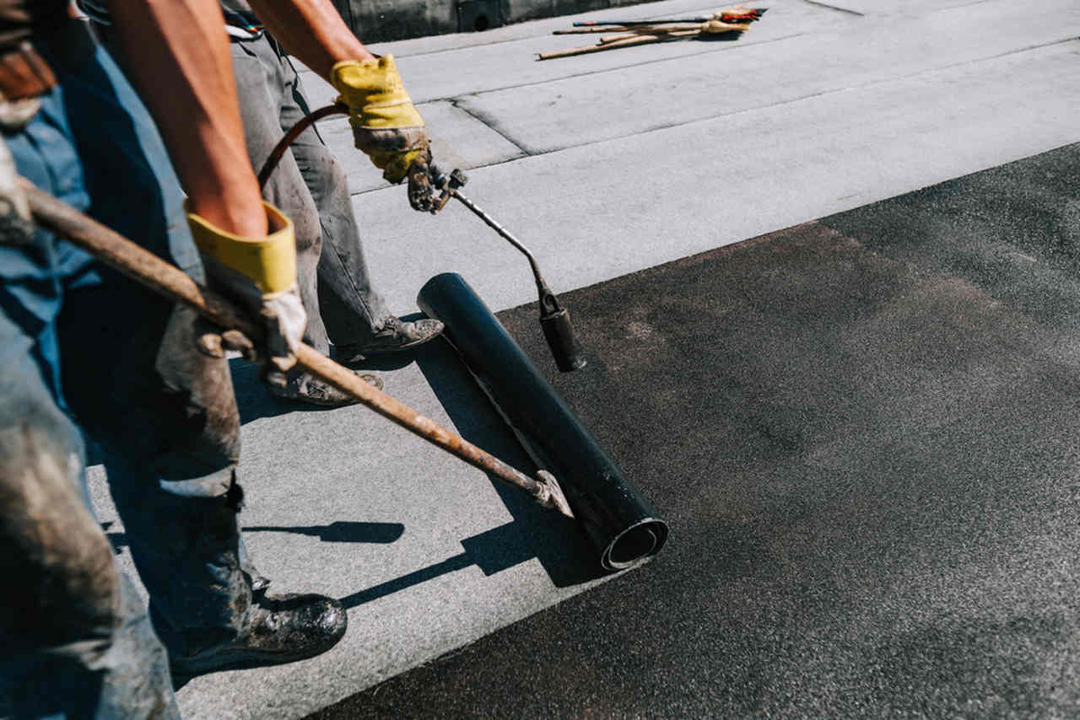
Polyurethane (PU) liquid membrane waterproofing is a high-performance system that uses a liquid-applied membrane to form a seamless, flexible, and durable waterproof layer. Known for its elasticity and crack-bridging ability, it is widely used in building construction, architecture, and renovation projects where movement and expansion are expected.
In Johor Bahru, this method is especially effective for exposed roofs, balconies, and high-traffic areas where durability and weather resistance are essential.
Where is Polyurethane Waterproofing Used?
- Flat Roofs & Terraces – Provides a seamless barrier against rain and UV exposure.
- Balconies & Decks – Ensures leak-proof surfaces that support long-lasting interior design layouts.
- Podiums & Parking Areas – Handles both moisture and heavy usage.
- Wet Rooms & Bathrooms – Applied under tiles to prevent seepage into the building layout.
Advantages of Polyurethane Liquid Membrane Waterproofing
- High Flexibility – Expands and contracts with building movement.
- Seamless Protection – No joints or seams, reducing leakage risks.
- Durability – Resistant to UV rays, weathering, and chemical exposure.
- Long-Term Performance – Extends the lifespan of both construction and interior design finishes.
Limitations
- Requires professional and precise application.
- More expensive compared to cementitious or bituminous coatings.
- Sensitive to moisture during curing, which must be controlled.
Plumbing Methods
a) Concealed Plumbing
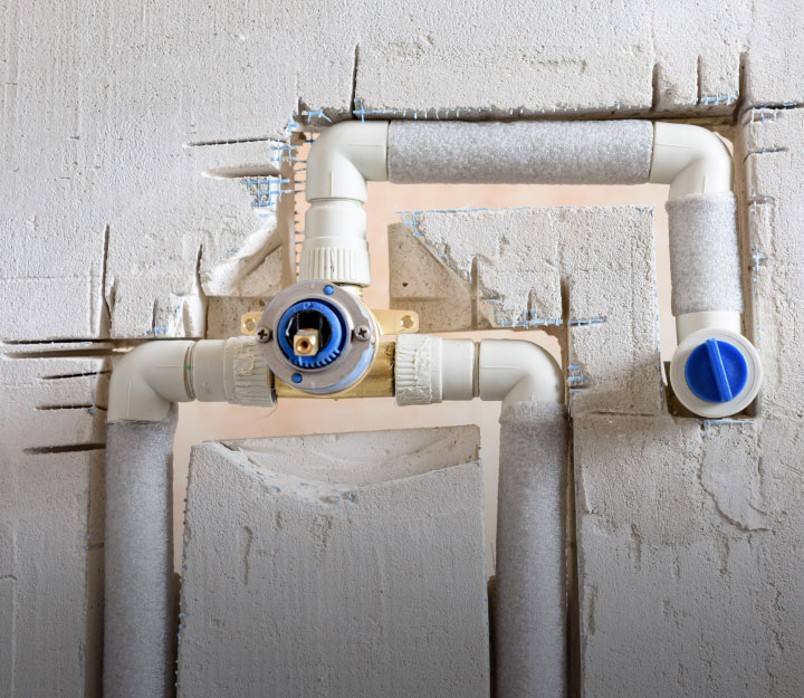
Concealed plumbing refers to water supply and drainage pipes being hidden within walls, ceilings, or floors, rather than exposed on the surface. It is a popular choice in interior design and architecture because it provides a clean and modern look, while still meeting practical client design needs. In Johor Bahru construction and renovation projects, concealed plumbing is increasingly favored for both residential and commercial spaces.
Where is Concealed Plumbing Used?
- Bathrooms & Toilets – Pipes are hidden behind tiles, ensuring a neat design layout.
- Kitchens – Supply and drainage lines integrated into walls and cabinets.
- Laundry & Utility Areas – Discreet routing of water supply for washing machines.
- Office & Commercial Spaces – Maintains sleek finishes in architecture and interior fit-outs
Advantages of Concealed Plumbing
- Aesthetic Appeal – Keeps walls and floors neat, enhancing the overall interior design.
- Space Efficiency – Optimizes the building layout by reducing clutter.
- Durability – With proper materials (UPVC, CPVC, copper), concealed systems can last for decades.
- Safety – Reduces risk of accidental damage compared to exposed piping.
Limitations
- Repair Difficulty – Fixing leaks may require breaking walls or tiles.
- Installation Cost – Slightly higher than exposed plumbing due to concealment works.
- Planning Required – Needs careful coordination between construction, architecture, and interior design teams during early stages of the design layout
b) UPVC and CPVC Pipe Systems
What are UPVC and CPVC Pipe Systems?
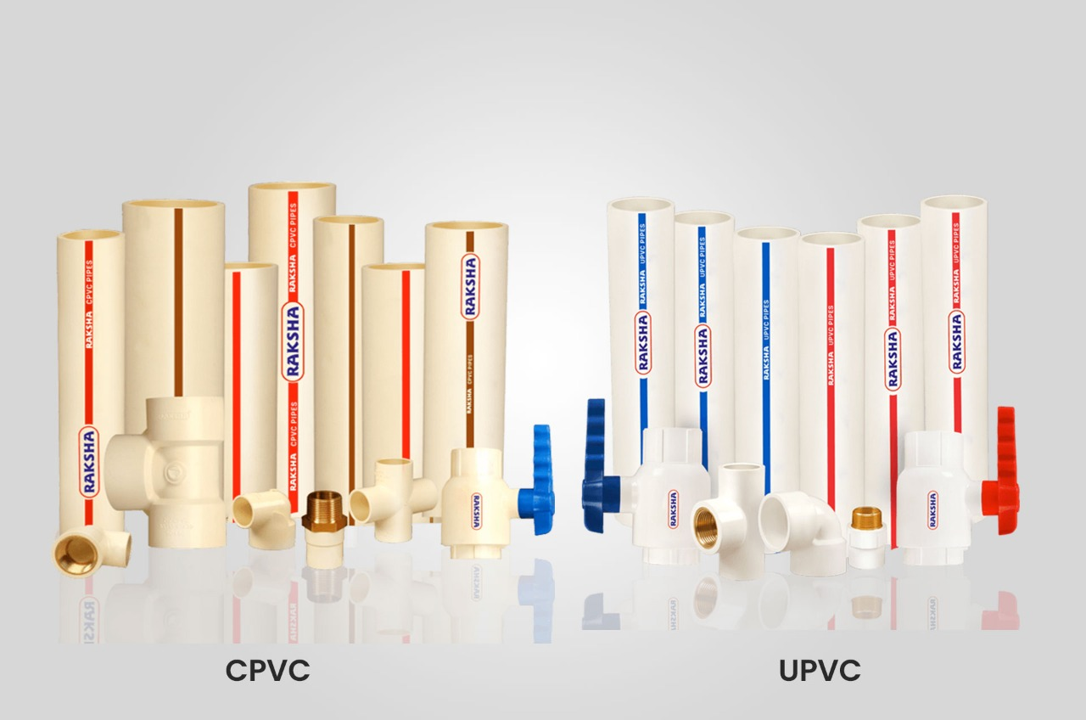
- UPVC (Unplasticized Polyvinyl Chloride) pipes are rigid, durable, and commonly used for cold water supply and drainage.
- CPVC (Chlorinated Polyvinyl Chloride) pipes are chemically treated to withstand higher temperatures, making them suitable for both hot and cold-water systems.
Both are widely used in Johor Bahru construction and renovation projects because they meet modern architecture and interior design demands for efficiency, safety, and durability.
Where are UPVC and CPVC Pipes used?
UPVC Pipes
- Cold water supply systems in homes and offices.
- Drainage and sewage pipelines in the building layout.
- Rainwater and irrigation systems.
CPVC Pipes
- Hot and cold-water supply in bathrooms and kitchens.
- Commercial architecture projects such as hotels and restaurants.
- Industrial buildings requiring chemical and temperature resistance.
Limitations
- UPVC – Not suitable for hot water applications.
- CPVC – Slightly more expensive than UPVC and requires careful installation.
- May crack if exposed to direct sunlight for prolonged periods without protection.
c) Copper Plumbing
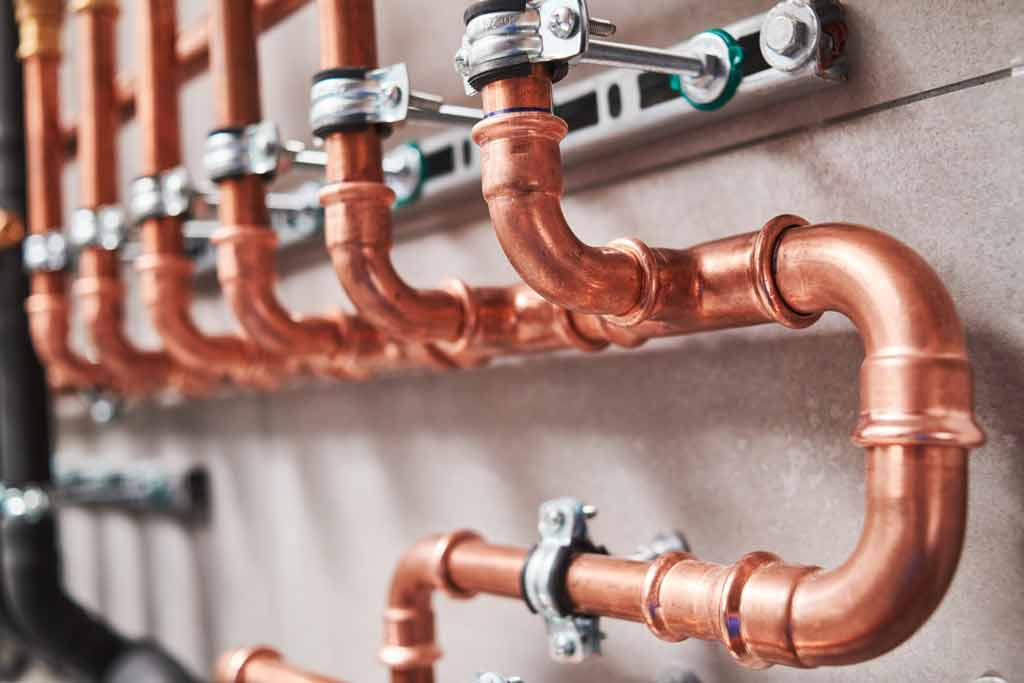
Copper plumbing systems use copper pipes to distribute water throughout a building. Known for their strength, durability, and ability to withstand both high temperatures and pressures, copper pipes have been a trusted choice in construction for decades. In Johor Bahru, copper plumbing is often specified in premium architecture projects or where clients prioritize long-lasting solutions that align with high-quality interior design layouts.
Where is Copper Plumbing Used?
- Residential Homes – Hot and cold-water distribution systems.
- Commercial Architecture Projects – Hotels, hospitals, and office buildings where reliability is critical.
- Renovation Works – Upgrading from old galvanized pipes to long-lasting copper.
- High-End Interior Design Layouts – Kitchens, bathrooms, and wet areas requiring durability and aesthetics.
Advantages of Copper Plumbing
- Durability – Resistant to corrosion and can last 50+ years.
- Heat Resistance – Handles hot water systems without deforming.
- Hygienic – Natural resistance to bacteria, ensuring safe drinking water.
- Pressure Strength – Withstands high water pressure, suitable for multi-story building layouts.
- Value Addition – Seen as a premium plumbing choice that enhances the overall construction quality
Limitations
- Cost – More expensive than UPVC or CPVC systems.
- Installation – Requires skilled labor for soldering or compression fittings.
- Potential Oxidation – Over time, copper may develop a green patina (though this doesn’t affect function).
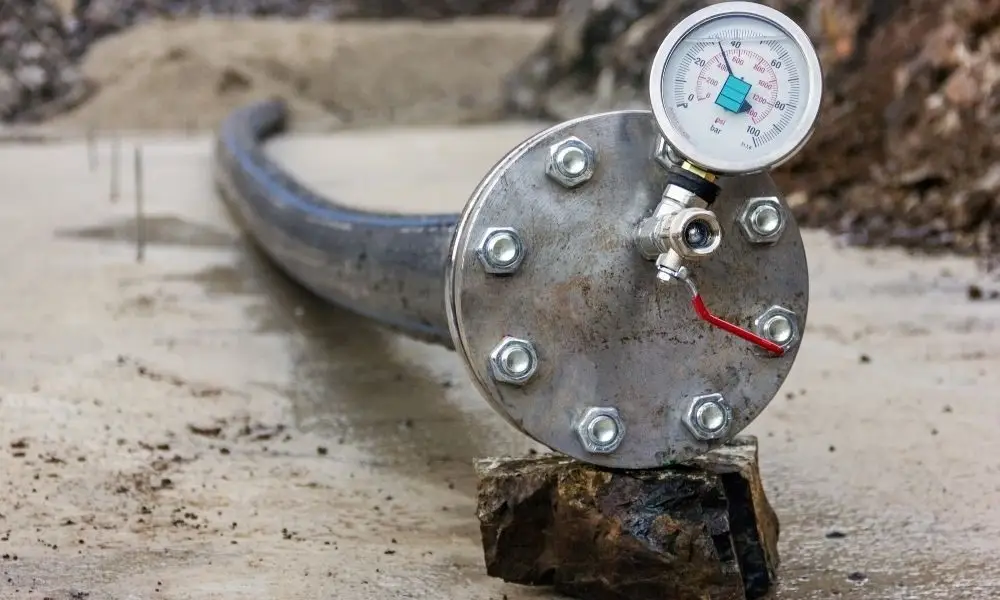
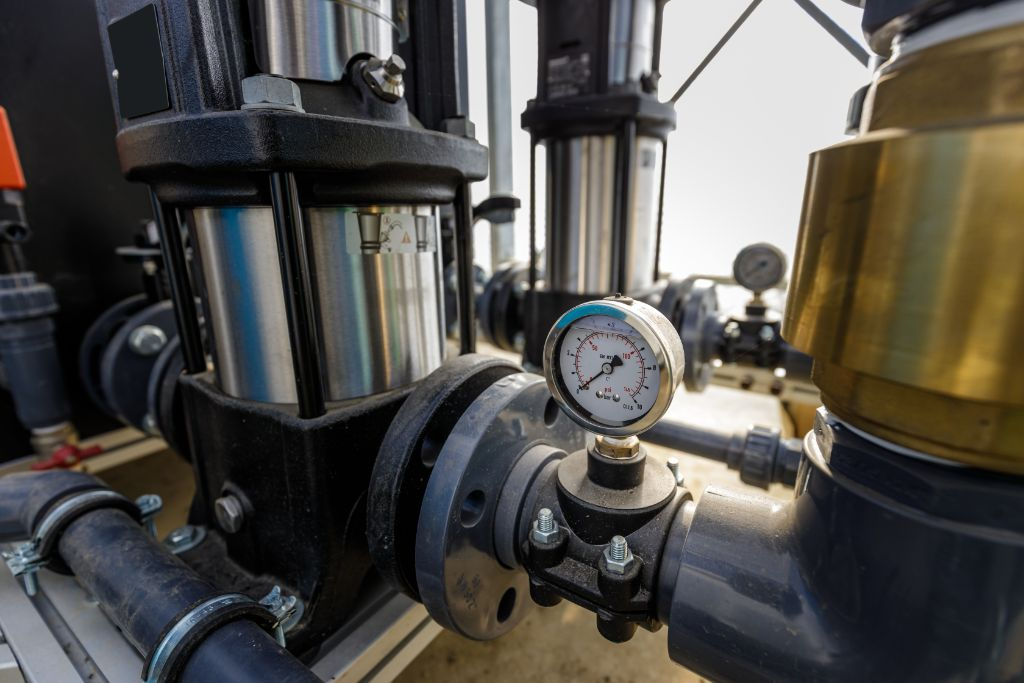
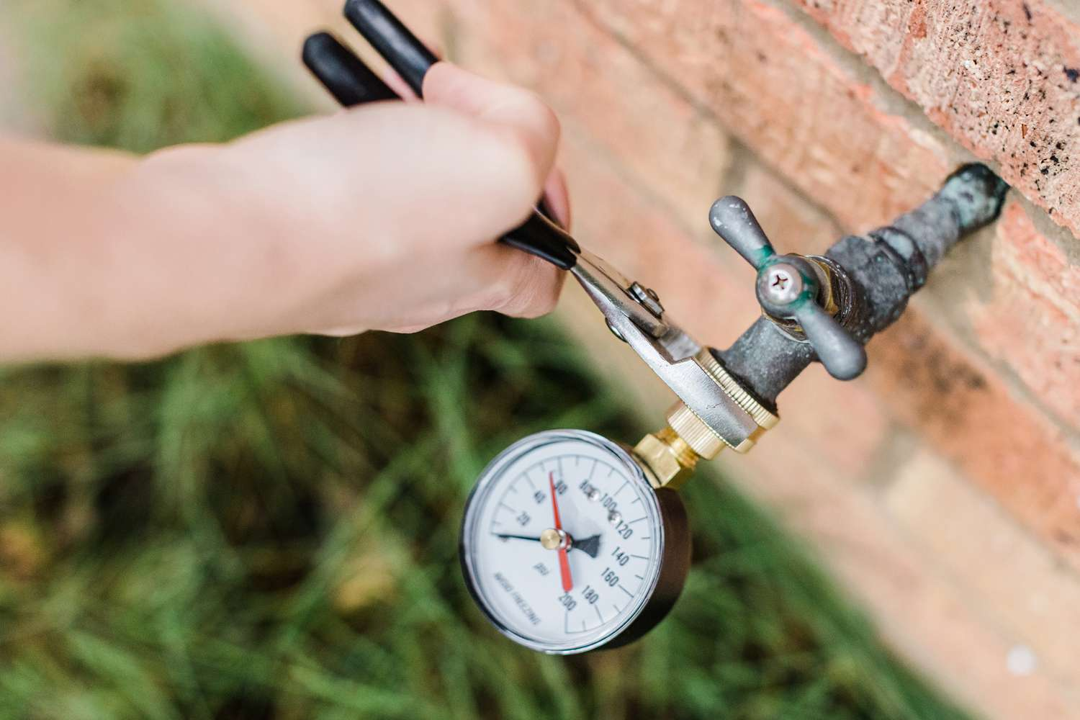
d) Pressure Testing
Pressure testing is the process of checking newly installed or existing plumbing systems by applying water or air pressure to ensure there are no leaks, defects, or weaknesses in the pipeline. It is a critical step in construction before walls, floors, or ceilings are closed up, especially in interior design projects where concealed systems must remain reliable.
Types of Pressure Testing
Hydrostatic Testing (Water Test)
- Pipes are filled with water and pressurized to detect leaks.
- Common in residential and commercial building layouts.
Pneumatic Testing (Air Test)
- Air is used instead of water, suitable for systems where water testing may not be practical.
- Requires extra caution due to the risk of high-pressure air release
Why Pressure Testing is important
- Leak Detection – Identifies leaks before tiles, finishes, or walls are installed.
- Quality Assurance – Ensures the plumbing system meets both architecture standards and client design needs.
- Cost Savings – Prevents expensive repairs after completion of interior design layouts.
- Safety & Compliance – Verifies that the installation follows proper construction codes and practices.
- Longevity – Enhances the reliability of water supply systems in the building layout.
Advantages of Pressure Testing
- Guarantees a defect-free plumbing system.
- Builds client confidence in the durability of their renovation or construction project.
- Helps contractors' hand over projects with assurance of quality.
Limitations
- Must be conducted by skilled technicians.
- Requires careful monitoring to avoid false readings.
- Adds time to the overall design layout and project schedule, but ensures long-term benefits.
4. Best Practices for Johor Bahru Renovation Projects
- Hire contractors who specialize in both construction and interior design.
- Use high-quality waterproofing products suited for Johor Bahru’s climate.
- Test all plumbing systems before covering walls or floors.
- Ensure close collaboration between architecture and design teams to avoid layout conflicts.
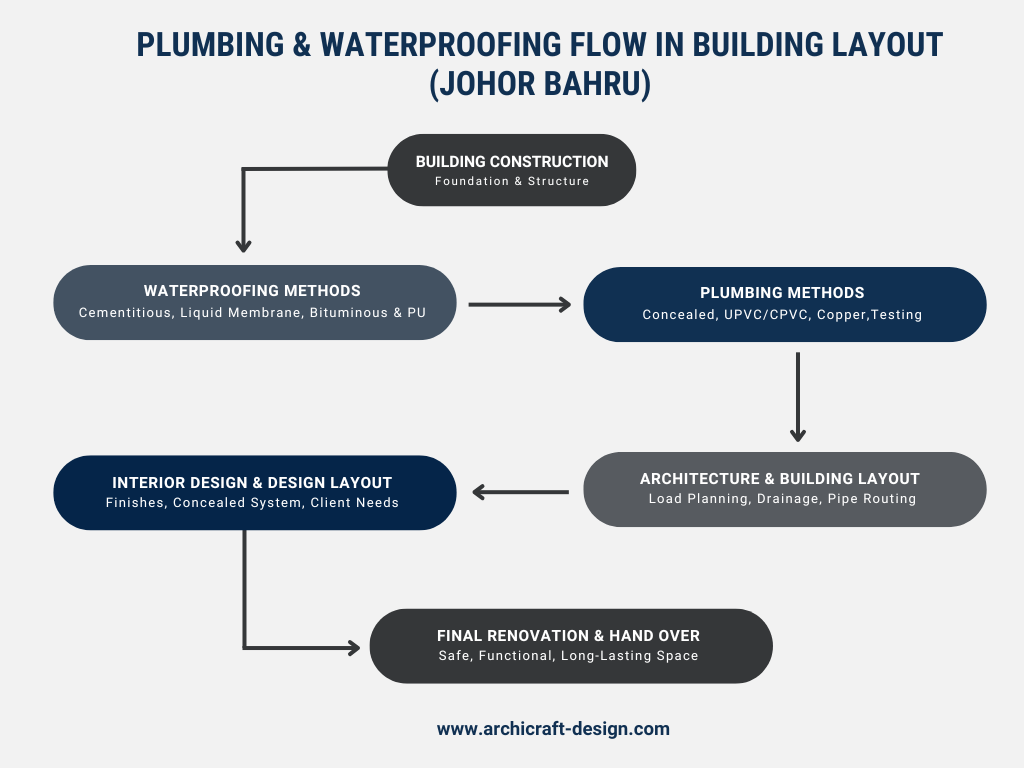
The image is a visual flow diagram showing how waterproofing and plumbing fit into building construction, architecture, interior design, and renovation in Johor Bahru.
5. Why It Matters for Interior Design in Johor Bahru
Even though waterproofing and plumbing are hidden, they form the backbone of any interior design project. Concealed water systems, durable finishes, and moisture-proof solutions allow the design layout to remain beautiful and practical for years to come.
Conclusion :
In Johor Bahru building construction, architecture, interior design, and renovation, waterproofing and plumbing are essential elements that ensure safety, functionality, and longevity. By considering them early in the construction process, integrating them into the building layout and design layout, and tailoring solutions to each client design need, homeowners and businesses gain peace of mind knowing their spaces are both stylish and built to last.
Explore Our Work:
Contact us at +6011-5755 0549 to start creating a space that truly inspires.
↵Back to Showcase